By Clayton Wolfe
In a market where the architecture is dramatic, the lots are generous, and the mountain backdrops are extraordinary, the landscaping around a Paradise Valley home carries more visual weight than almost anywhere else I work. A well-executed exterior doesn't just improve curb appeal — it signals that the property has been cared for at the same level of intention as everything inside. I've walked hundreds of properties across this market, and the homes that stop buyers at the curb before they've even opened the car door share a consistent quality: landscaping that feels native, deliberate, and unmistakably Sonoran Desert. Here's what I recommend to sellers who want their property to make that kind of impression.
Key Takeaways
- Desert-native plants outperform imported landscaping in both appearance and long-term resilience
- Landscape lighting is one of the highest-return investments a Paradise Valley seller can make
- Hardscaping and entry design signal quality before a buyer reaches the front door
- Irrigation efficiency and plant establishment directly affect how a property photographs and presents
Choose Plants That Belong in the Desert
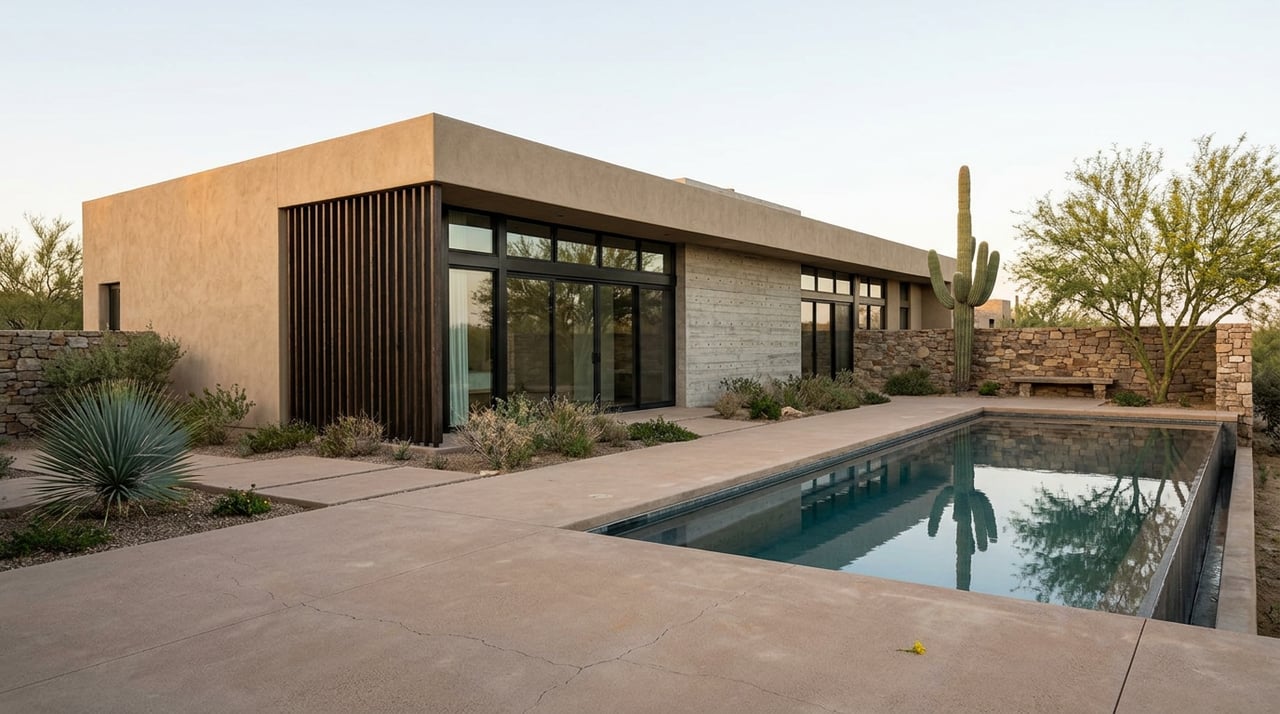
The single most important landscaping decision in Paradise Valley is plant selection. Homes that lean into the Sonoran Desert landscape — rather than fighting it with turf grass and tropical imports — look more appropriate, require less maintenance, and photograph more naturally against the surrounding mountain terrain. Desert-native and low-water plantings have become the clear standard in luxury desert markets, and buyers here recognize the difference immediately.
Plants That Work in Paradise Valley's Climate
- Saguaro cactus — iconic, slow-growing, adds irreplaceable structure and character
- Palo verde and desert willow — provide canopy shade and seasonal flowering without heavy water demands
- Agave and aloe — bold sculptural forms that anchor planting beds and entry features
- Ocotillo — dramatic vertical lines, spectacular red bloom in spring
- Bougainvillea — heat-tolerant, vivid color along walls, gates, and covered entry structures
- Brittlebush and desert marigold — low-growing color that softens hardscape transitions
Landscape Lighting Is One of the Highest-Return Investments You Can Make
Desert landscaping in Paradise Valley takes on a completely different character after dark — and in a market where twilight photography and evening showings are standard, that matters significantly. Uplighting mature saguaros, washing boulder features with low light, and illuminating the driveway approach all create a sense of drama and intentionality that elevates the entire presentation. I consistently see lighting upgrades translate directly into stronger first impressions at open houses and in listing photography.
Lighting Placements That Deliver the Most Impact
- Uplights at the base of specimen cacti and feature trees
- Path lighting along the front walkway and driveway border
- Wash lighting on stone walls, entry columns, or architectural facade elements
- Soffit lighting or downlights under covered entry structures and ramadas
- Accent lighting on boulder groupings and natural rock features
Hardscaping and Entry Design That Signal Quality
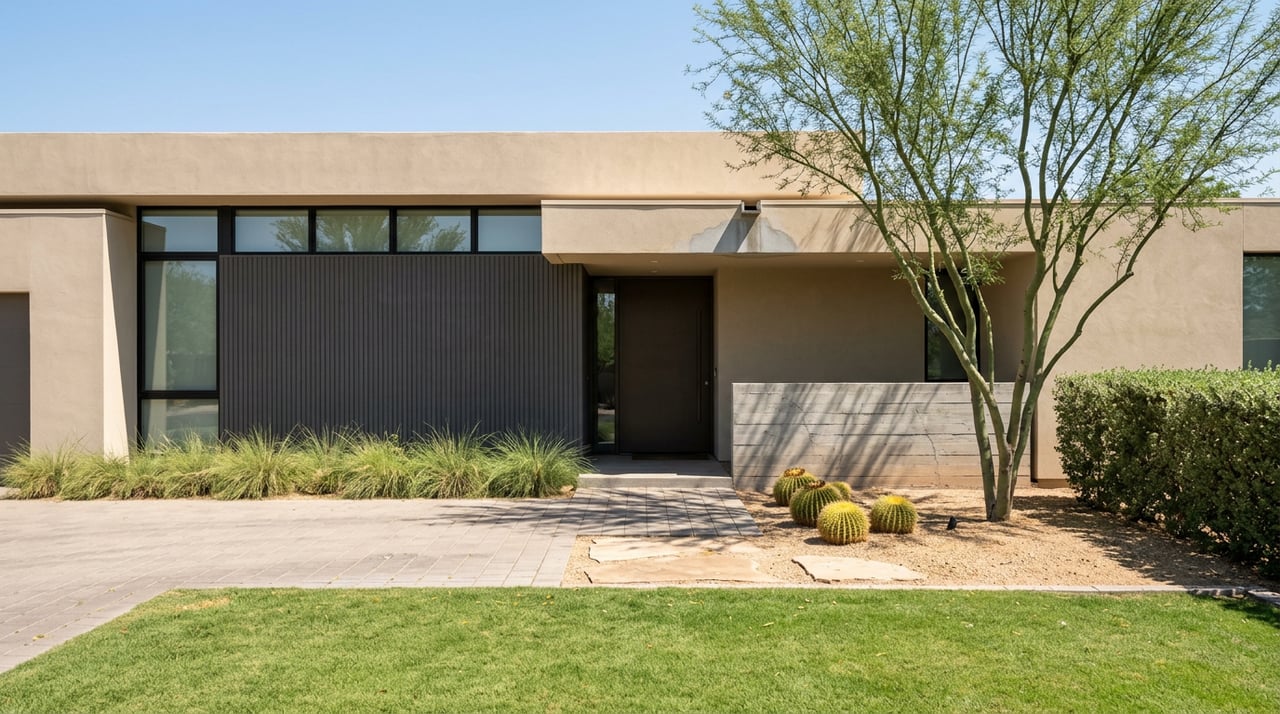
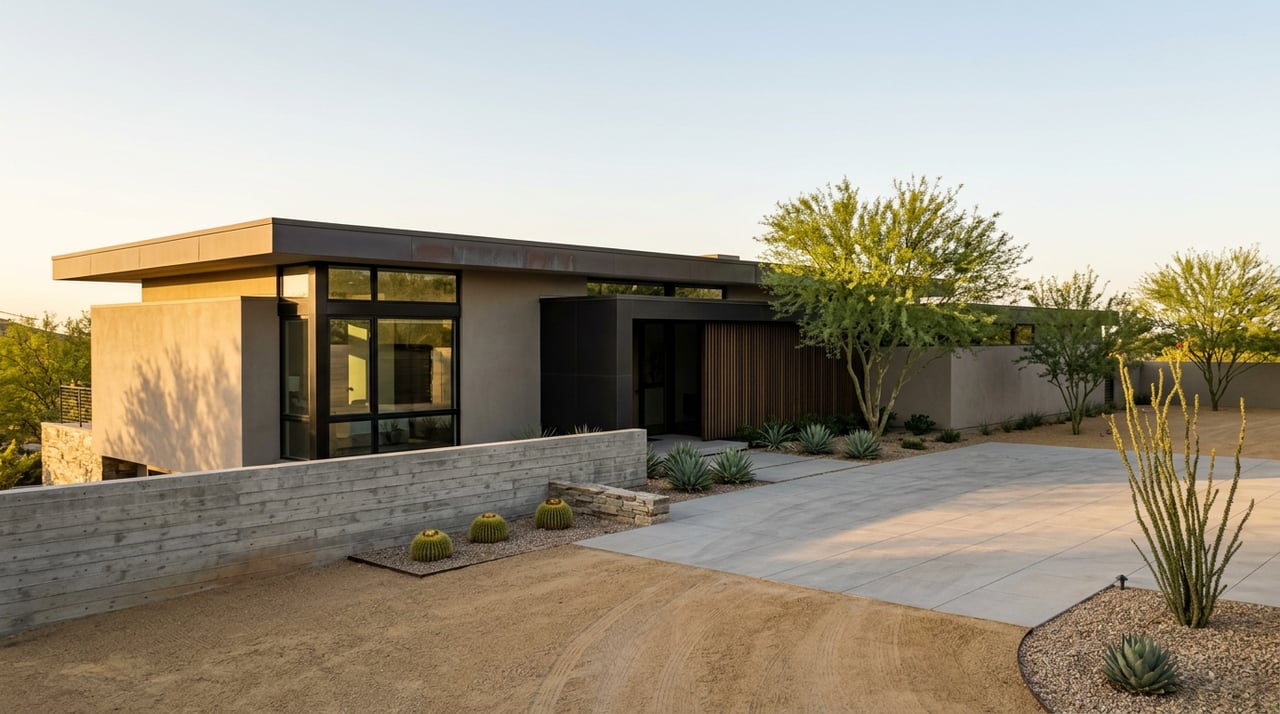
The hardscape surrounding your plantings shapes the overall impression as much as the plants themselves. In Paradise Valley, decomposed granite and natural stone are the dominant ground-cover materials — and the quality of execution matters. Clean edging, consistent gravel depth, well-maintained paver or flagstone driveways, and a defined entry approach all communicate that a property has been maintained at a high standard. These details hold particular weight in gated communities and along the prominent street frontages throughout the market.
High-Impact Hardscape Updates for Paradise Valley Sellers
- Refresh or replace decomposed granite in planting beds and walkway borders
- Reseal or re-sand paver driveways and entry approaches
- Add or restore natural boulder groupings near the entry — boulders read as native and permanent
- Install or update a defined entry gate, courtyard wall, or feature column at the driveway approach
- Clean and re-edge all bed transitions for a crisp, maintained appearance
Finishing Details That Complete the Presentation
The details that close the gap between a well-maintained yard and a truly impressive one are often small — but they're what a buyer notices in the first thirty seconds. Fresh gravel, trimmed plant specimens, a power-washed driveway, and healthy irrigation all contribute to a move-in-ready quality that resonates in this price range. I always walk my sellers through a pre-listing exterior audit because the finishing layer is where presentation-ready properties separate themselves from the competition.
Pre-Listing Exterior Checklist
- Top-dress all decomposed granite areas with fresh material for a clean, uniform appearance
- Trim and shape all specimen plants — overgrown agave and saguaro offsets should be addressed
- Inspect and service the drip irrigation system before listing, and confirm all zones are functioning
- Power-wash driveway, walkways, and the front facade of the home
- Remove any dead or unhealthy plant material and replace with established specimens
Frequently Asked Questions
How much water do desert landscape plants typically require once established?
Most desert-native plants in the Sonoran region require minimal supplemental irrigation once established — typically one to two years after planting. Drip irrigation on a timer handles the establishment phase efficiently, and many mature desert landscapes in Paradise Valley run on very low water budgets without any visible compromise to appearance. This is a genuine advantage to buyers who want a beautiful exterior without ongoing water cost.
Are there landscaping restrictions I should know about in Paradise Valley?
Paradise Valley has its own town planning and zoning guidelines, and some subdivisions carry additional CC&R requirements. Generally, the town encourages desert-appropriate landscaping and regulates certain grading, wall heights, and plant removal near natural washes or hillside lots. I always advise sellers to review their specific parcel's guidelines before making significant changes, and I can connect you with the right resources to confirm compliance before listing.
What's the best time of year to update desert landscaping before listing?
Fall — September through November — is ideal for both planting and listing in Paradise Valley. Temperatures have moderated enough for new plants to establish without heat stress, and the desert landscape looks its most polished heading into the peak winter and spring selling season. If you're targeting a spring listing, I recommend beginning any significant landscaping refresh no later than January to allow for proper establishment and photography timing.
Contact Clayton Wolfe Today
Presentation matters at every price point in Paradise Valley — and in a market where the competition is consistently well-maintained, the exterior of your home needs to earn attention before anyone steps inside. I work closely with sellers to ensure every aspect of how a property presents, from the driveway approach to the mountain view framing, is working in their favor.
Reach out to me at Clayton Wolfe to schedule a pre-listing consultation and talk through what your property needs to compete at the highest level.