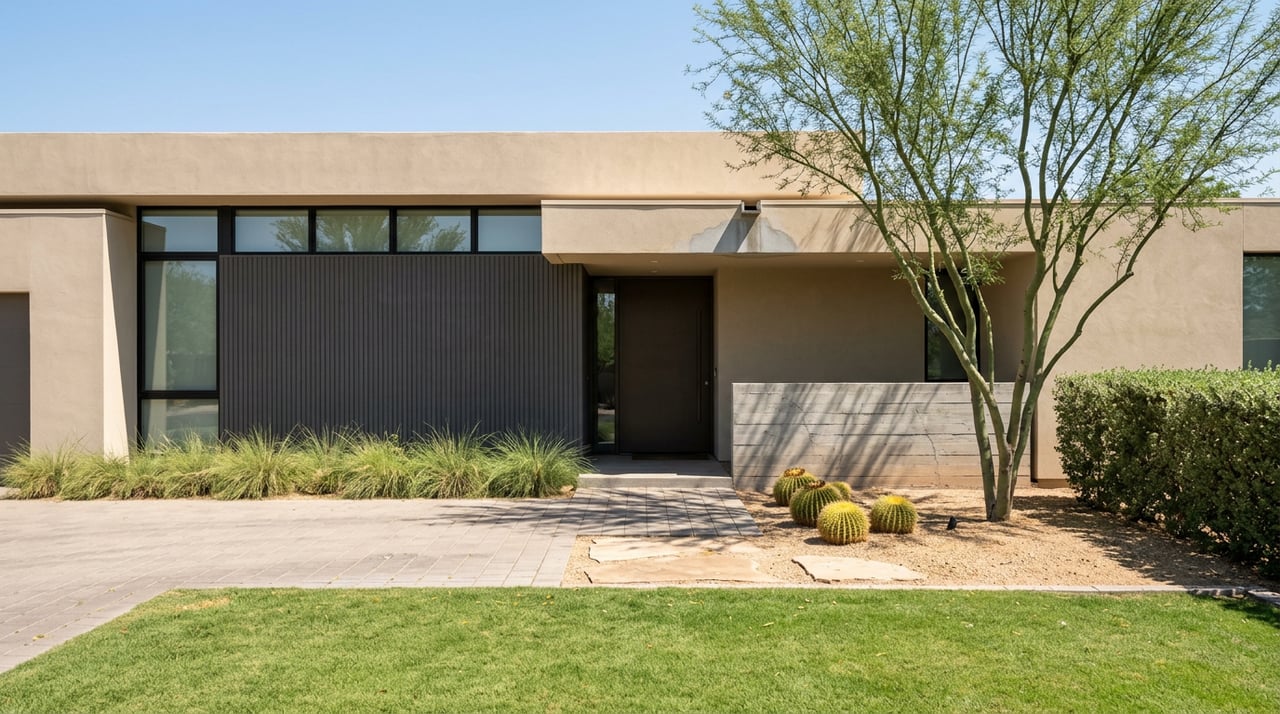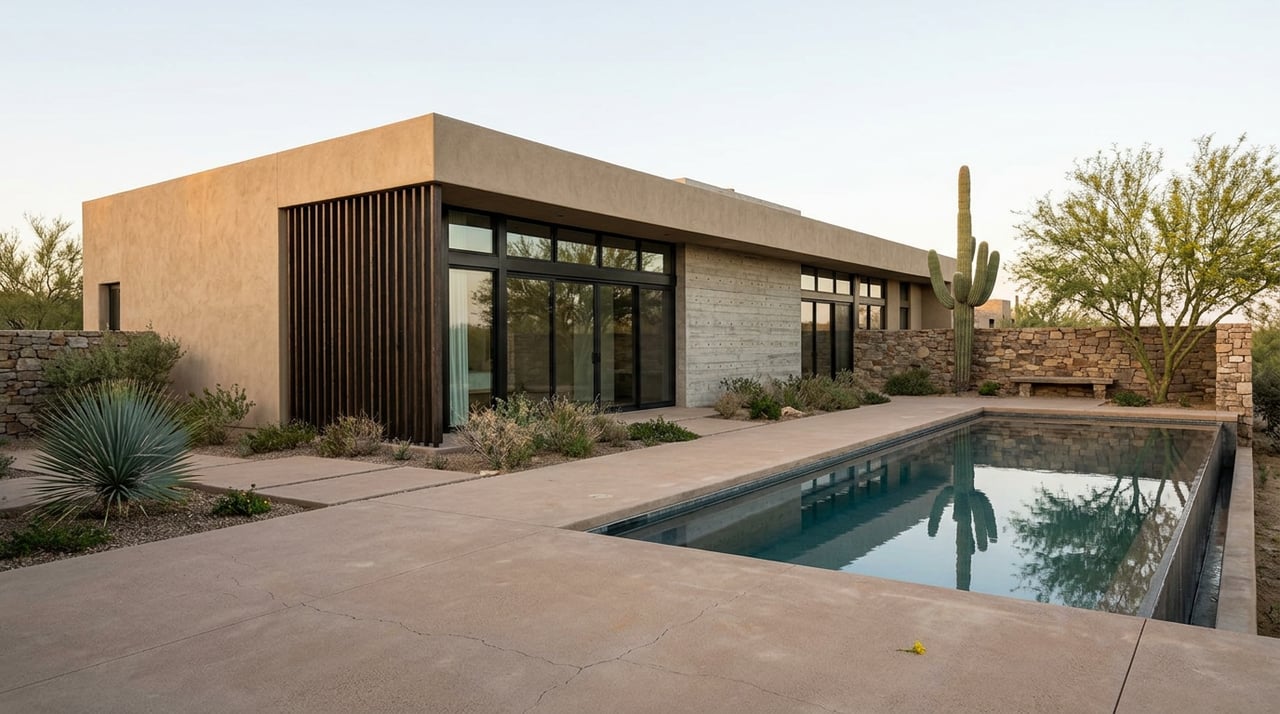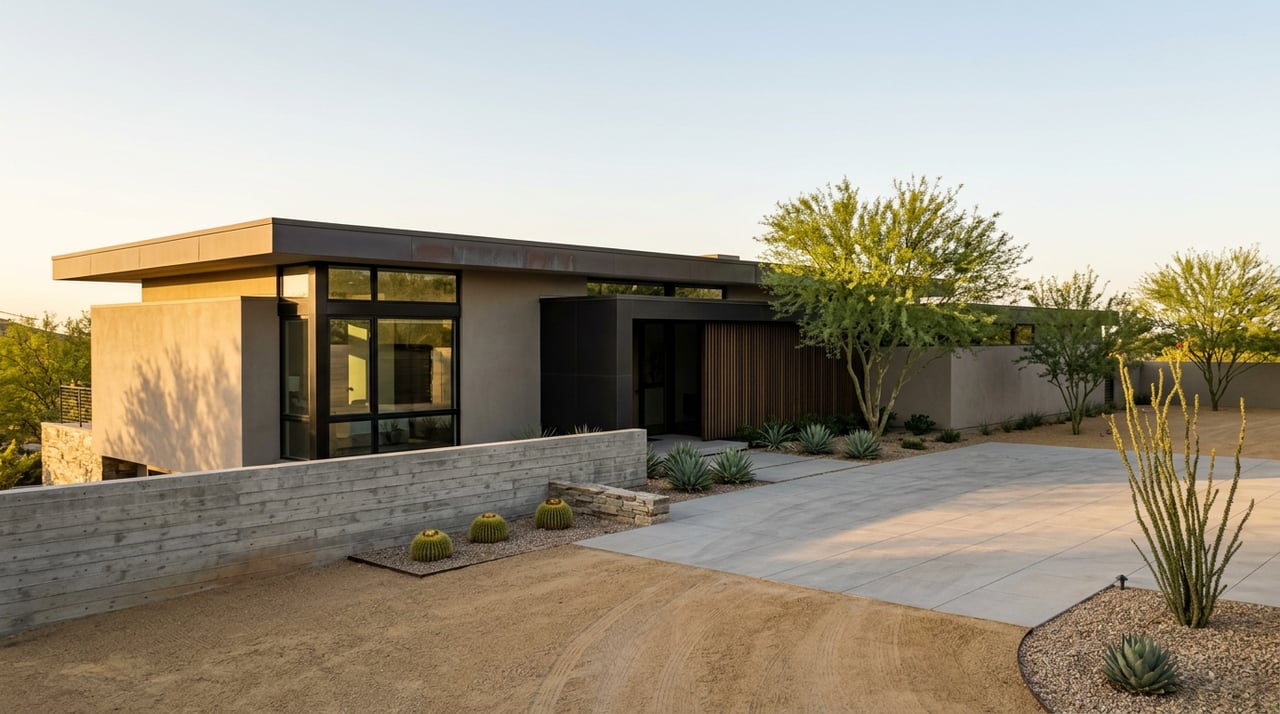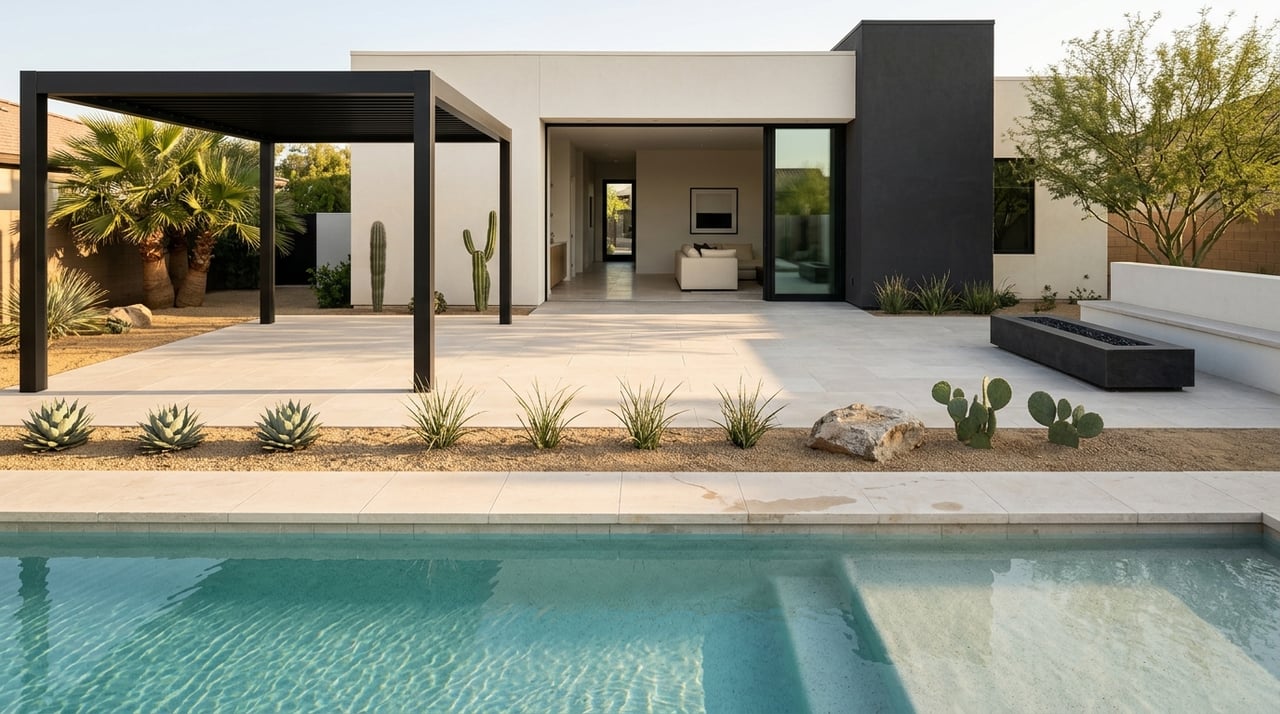
If you own or are shopping for a luxury home in Paradise Valley, outdoor living is not a nice extra. It is a major part of how the property looks, feels, and functions year-round. In a place with intense sun, limited rainfall, and estate-scale lots, the best exterior spaces do more than impress. They create comfort, support daily use, and reflect the architecture of the home. Let’s dive in.
Why outdoor living matters in Paradise Valley
Paradise Valley is shaped by space, privacy, and a strong connection to the desert setting. The town’s R-175 zoning is designed to preserve open space and natural features, with minimum lot sizes of 175,000 square feet. That scale gives homeowners room to think beyond a basic patio and build outdoor areas that feel like true extensions of the home.
Climate is the other major driver. Nearby official Phoenix climate normals show 127 days each year with highs of 100 degrees or more, 211 days at or above 90 degrees, and just 7.22 inches of annual precipitation. Paradise Valley also uses a 107-degree summer cooling design condition in its building guidance, which makes one thing clear: the most valuable outdoor spaces here are built around shade, cooling, and smart material choices.
Start with shaded outdoor rooms
In Paradise Valley, shade is often the feature that makes every other feature work better. A pool deck, lounge area, dining space, or courtyard becomes much more usable when it is protected by deep overhangs, pergolas, gazebos, or ramadas.
Covered outdoor rooms also fit the design language of many luxury homes in the area. They help blur the line between inside and outside, especially when finishes, ceiling treatments, and flooring materials feel visually connected to the main residence. For buyers, that seamless flow can make a property feel more complete and more livable.
It is also worth noting that covered patios, gazebos, ramadas, and certain courtyard areas can affect floor-area calculations in Paradise Valley. That means the design should be thoughtful from the start, not added casually at the end.
Shade ideas that elevate the space
- Deep roof overhangs that protect western and southern exposures
- Pergolas layered with adjacent lounge seating
- Ramadas that create a separate dining or conversation zone
- Covered patios that visually continue the great room
- Courtyard walls that define space and reduce sun exposure
Design the pool as a full outdoor experience
A resort-style pool still plays a leading role in Paradise Valley outdoor living, but the strongest designs treat the pool as one part of a larger composition. Water, shade, decking, lighting, and seating should work together so the area feels intentional rather than pieced together.
That approach matters in this market because outdoor living is expected to feel polished and complete. A pool should support both quiet daily use and evening entertaining. Spa placement, adjacent lounge zones, and the relationship to covered living space can all influence how luxurious the final result feels.
From a practical standpoint, Paradise Valley requires permits for in-ground and above-ground pools and spas. Pool and spa projects typically require a site plan, structural calculations, and a pool plan from an engineer, and hillside properties may need extra documentation or review.
Pool features that fit Paradise Valley homes
- Integrated spa areas
- Shaded chaise lounges or daybeds
- Layered landscape lighting around the deck
- Seating areas that connect directly to the house
- Water features that add movement and sound
Keep safety and compliance in view
Pool barriers are required in Paradise Valley for outdoor pools, hot tubs, and spas. The town also requires specific gate and opening standards, including self-closing and self-latching gates. In luxury design, these elements should be planned as part of the overall layout so safety and aesthetics work together.
Use courtyards to create indoor-outdoor flow
Courtyards are especially effective in Paradise Valley because local code already recognizes them as architectural outdoor rooms attached to the house. When done well, a courtyard does more than add square footage outside. It creates a visual pause, a private gathering space, and a stronger relationship between the architecture and the landscape.
This is one of the most refined ways to elevate a luxury property. Rather than placing every outdoor feature in the backyard, a courtyard can introduce layered outdoor living at the entry, off a primary suite, or alongside a main entertaining space.
Paradise Valley also expects courtyard walls to use materials and colors compatible with the main residence. That supports a design approach where the house and outdoor areas feel unified from the beginning.
Courtyard ideas with lasting appeal
- A front courtyard with sculptural desert planting
- A private lounge courtyard off the primary suite
- A dining courtyard framed by masonry walls
- A fireplace courtyard for evening use
- A central courtyard that anchors multiple rooms
Add fire features for evening entertaining
Daytime comfort matters, but evening ambiance is where many outdoor spaces come to life. In Paradise Valley, fire features can act as the nighttime counterpart to shade structures. They create warmth, define seating areas, and give the yard a more intimate feel after sunset.
The town’s valuation schedule specifically lists BBQ areas, kiva fireplaces, water fountains, and water features, which reflects the kinds of outdoor improvements commonly seen in the local market. For a luxury homeowner, the key is not simply adding a fire element. It is placing it where it supports the flow of the home and surrounding landscape.
If your project includes gas lines or electrical service for outdoor cooking or lighting, permits may also be required. Planning for those systems early can help avoid redesigns later.
Fire feature options to consider
- A kiva-style fireplace in a covered lounge
- A linear fire feature near the pool terrace
- A fire pit with built-in masonry seating
- An outdoor kitchen with a nearby warming element
- Accent lighting that complements the fire glow
Choose water-wise desert landscaping
In Arizona, landscaping is the largest use of potable water, and as much as 70 percent of residential water use is outdoors. That makes water-wise design more than a trend. In Paradise Valley, it is one of the smartest ways to create a beautiful exterior that also fits the region.
A strong desert landscape palette can feel sculptural, elegant, and low maintenance when it is designed well. Instead of relying on lawn-heavy plans, many luxury properties benefit from regionally appropriate planting, efficient irrigation, and layered textures that match the home’s architecture.
University of Arizona Cooperative Extension notes that only native plants and some desert-adapted plants can live on the region’s very low annual rainfall without significant added water. In practical terms, that supports a landscape plan centered on drought-tolerant material rather than thirsty turf.
Planting directions that suit Paradise Valley
- Palo verde and mesquite for structure and filtered shade
- Saguaro, agave, and cactus for sculptural character
- Rock, gravel, and decomposed granite for clean texture
- Irrigation designed around desert-adapted zones
- Rainwater harvesting strategies that reduce irrigation demand
Consider Firewise design on hillside or desert-edge lots
If a property borders native desert or hillside terrain, landscape planning should also account for wildfire resilience. University of Arizona Cooperative Extension recommends Firewise strategies such as using low-flammability plantings near structures, breaking up continuous vegetation with hardscape, and using nonflammable materials like rock, brick, or concrete as fuel breaks.
For luxury homes, this can be handled in a way that still feels beautiful and refined. Thoughtful hardscape, planting separation, and material selection can protect the home while preserving the desert aesthetic that makes Paradise Valley so distinctive.
Plan for permits before construction begins
One of the biggest mistakes in outdoor projects is treating code and permitting like an afterthought. In Paradise Valley, exterior improvements often move through separate permit paths depending on the feature. Pools, spas, electrical work, plumbing, mechanical work, and fences or site walls may each need their own review.
That matters because many outdoor luxury upgrades are interconnected. A pool may need barrier compliance, a fire feature may involve gas service, a covered patio may affect floor area, and terracing may trigger grading review. On hillside lots, the town may also require a construction staging or traffic plan, financial assurance, a temporary construction easement, or Hillside Building Committee review.
Grading and drainage deserve special attention as well. If earthwork changes the property’s gradient or drainage conditions, Paradise Valley requires a grading permit, which can become relevant with sunken patios, retaining walls, or major hardscape changes.
The highest-value outdoor upgrades
The outdoor features that tend to feel most valuable in Paradise Valley are the ones that respond directly to local conditions. They reduce heat exposure, respect water realities, connect visually to the home, and fit within the town’s permitting framework.
In other words, the best exterior investments are usually not the most complicated. They are the most intentional. A shaded courtyard, a well-composed pool terrace, a fire feature for evening gathering, and a desert-adapted landscape can work together to make a luxury property feel both elevated and deeply suited to its setting.
Whether you are preparing to sell or planning improvements for long-term enjoyment, outdoor living can shape how your home is experienced from the first impression to the final showing. If you want guidance on what features align with buyer expectations in Paradise Valley luxury real estate, connect with Clayton Wolfe for a private consultation.
FAQs
What outdoor features add the most value to a Paradise Valley luxury home?
- In Paradise Valley, the most compelling outdoor features are typically shaded living areas, resort-style pools and spas, courtyards, fire features, and water-wise desert landscaping that feels integrated with the home.
Do Paradise Valley pool and spa projects require permits?
- Yes. Paradise Valley requires permits for in-ground and above-ground pools and spas, and submittals commonly include a site plan, structural calculations, and an engineer-prepared pool plan.
Do covered patios and ramadas affect Paradise Valley home design limits?
- Yes. Paradise Valley’s building guidance states that covered patios, gazebos, ramadas, and certain courtyard areas can count toward floor-area calculations.
What landscaping works best for luxury homes in Paradise Valley?
- Desert-adapted landscaping often makes the most sense, including plants such as palo verde, mesquite, saguaro, agave, and cactus, along with efficient irrigation and low-water hardscape materials.
Are pool barriers required for Paradise Valley homes?
- Yes. Outdoor pools, hot tubs, and spas must have compliant barriers, and the town requires features such as self-closing and self-latching gates.
What should homeowners know about outdoor projects on Paradise Valley hillside lots?
- Hillside properties may require added documentation and review, including construction staging or traffic plans, financial assurance, temporary construction easements, and Hillside Building Committee review before permit approval.