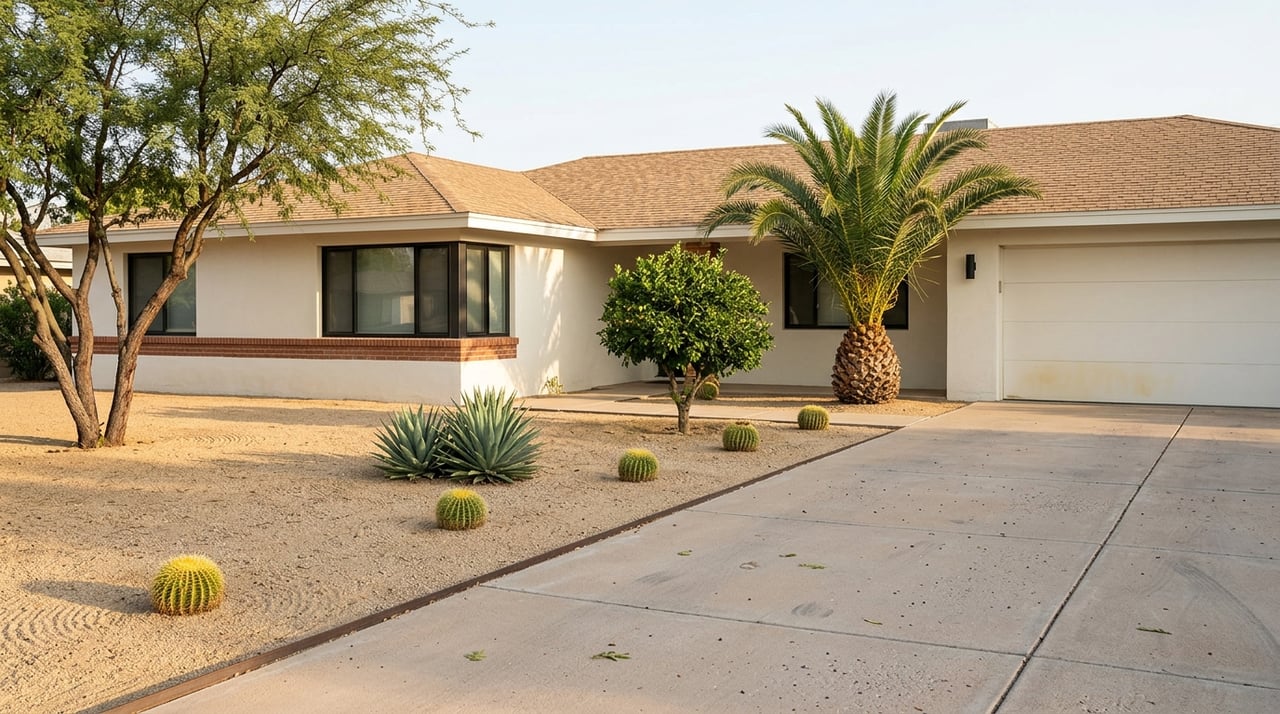
Wondering whether your Arcadia ranch should be sold for its land value or its livable appeal? That question can shape your pricing, your marketing, and the kind of buyer who ultimately shows up. If you own an older home in Arcadia, the right strategy is not always obvious, especially in a neighborhood where lot size, redevelopment potential, and renovation quality can all carry real weight. This guide will help you think through the tradeoffs so you can choose the path that best fits your property and your goals. Let’s dive in.
Why this decision matters in Arcadia
Arcadia is not a one-size-fits-all market. The area is commonly described as north of the Arizona Canal and south of Camelback Mountain, between 44th Street and Scottsdale Road, with roots as rural estate land made up of lots that were often about five to ten acres. That history still matters because buyers often look closely at parcel size, frontage, and what the land may support over time.
Arcadia also has a large share of homes built between 1950 and 1970. Phoenix planning materials note that the area is largely low-density single-family residential and that many owners have chosen to renovate rather than relocate because of the quality of construction in many mid-century homes. In other words, your ranch may be valued as a teardown, a remodel opportunity, or a move-in-ready home depending on its condition and site.
That distinction matters even more in a premium market. Redfin reported a May 2026 median sale price of $1,324,554 in Arcadia, while Phoenix single-family homes overall posted a median sale price of $485,000 in the May 2026 ARMLS and ShowingTime report. In a market like this, strategy can have a meaningful impact on outcome.
Sell to a builder when land leads
A builder is often the better buyer when the lot is the main asset. That usually happens when the existing house is functionally obsolete, needs major work, or does not fully match the value of the parcel beneath it. In Arcadia, large lots and redevelopment potential can make that math especially compelling.
Builders tend to view the property through a very different lens than a homeowner. They are asking whether the site supports a new build, a major expansion, or another higher-value use allowed by local rules. If your ranch has limited layout appeal, deferred maintenance, or a footprint that would be expensive to modernize, builder demand may be stronger than owner-occupant demand.
That said, a large lot does not automatically mean a builder will pay the highest price. Builders also care about constraints, timelines, and entitlement risk. If the parcel has development hurdles, the buyer pool may narrow or pricing may reflect that uncertainty.
Signs your Arcadia ranch may fit a builder
You may want to lean toward builder-focused marketing if several of these are true:
- The house needs substantial renovation or systems replacement
- The floor plan is hard to adapt to current buyer expectations
- The lot size, shape, or frontage stands out more than the house itself
- The property may support a more ambitious rebuild than the current home
- The surrounding area includes newer construction or major remodel activity
- The value conversation centers more on the parcel than the finishes
In these cases, your listing should answer redevelopment questions quickly and clearly. A builder buyer wants to understand what is possible before investing too much time.
Sell to a homeowner when livability leads
A homeowner is often the better buyer when the ranch is still enjoyable and practical to live in. That can mean the home has solid construction, an appealing layout, tasteful updates, or outdoor features that create real day-to-day value. In Arcadia, that buyer absolutely exists.
Phoenix planning materials note that many homes from the late 1950s and early 1960s were built with a level of quality that encouraged renovation rather than relocation. That helps explain why a preserved or updated ranch can compete well, even in a neighborhood where teardown activity gets attention. If your home feels comfortable, functional, and emotionally complete, an owner-occupant may see more value in it than a builder would.
This is especially relevant if the lot offers lifestyle benefits. Mature landscaping, shade, privacy, and usable outdoor space can be meaningful selling points for buyers who want to enjoy the property as it is or make gradual improvements over time.
Signs your Arcadia ranch may fit a homeowner
A homeowner-focused strategy may be the stronger choice if your property offers:
- A floor plan that still works well for modern living
- Updates that reduce near-term capital costs
- Good natural light, storage, or indoor-outdoor flow
- Mature trees or landscaping that add day-to-day enjoyment
- Space that may support an ADU, subject to city rules
- A presentation that feels move-in ready rather than purely speculative
Redfin describes Arcadia as somewhat competitive, with average homes selling for about 4% below list price and going pending in around 54 days, while hot homes can go pending in about 30 days. That tells you well-positioned homes can still move, especially when pricing and presentation align with buyer expectations.
How to tell if it is a teardown or remodel
This is usually the biggest question for sellers, and the answer starts with honesty about what buyers are really purchasing. Are they buying a house they want to live in, or are they buying a site they want to transform? In Arcadia, either answer can be correct depending on the parcel.
Start with the structure itself. If the home needs major functional changes, expensive system upgrades, or a near-total redesign to appeal to today’s buyers, it may lean toward teardown or major redevelopment value. If the home has good bones, meaningful updates, and a layout that still feels comfortable, it may deserve a homeowner-focused approach.
Then look at the land. Arcadia’s history as estate-sized property means lot size and frontage can carry unusual importance. If the parcel stands out enough that buyers are talking first about what could be built there, that is a sign land value may be leading the conversation.
What builders will evaluate first
If you think a builder could be the right audience, expect them to dig into site details early. Phoenix notes that lot splits, lot combinations, and lot-line adjustments are available only in certain circumstances and may still require zoning variances, street or easement dedications, or hillside review where slopes are 10% or greater. Those issues can directly affect value.
Phoenix also notes that official lot size should be verified through the Maricopa County Assessor, and the city’s ADU guidance says common single-family zones include R1-6 and R1-10. The same city guidance says current guest house rules can allow two ADUs per lot, with a third in some cases. For some buyers, that can broaden the possibilities, but it still needs to be evaluated at the parcel level.
This is why builder-facing listings should be practical, not just beautiful. The more clearly your listing package explains the site, the easier it is for a serious buyer to assess potential.
Information that helps builder buyers
If your ranch may appeal to a builder, useful materials can include:
- Survey
- Official lot size
- Zoning information
- Overlay or special planning district status
- A clear note on whether ADU potential appears plausible
- Any known site constraints that affect redevelopment review
Special rules can change the answer
In Arcadia, not every parcel plays by the same rules. Phoenix planning materials reference both the Arcadia Camelback Special Planning District and the Camelback Road Overlay District. Those area-specific factors can influence what a future buyer sees as realistic.
Historic status can matter too. Phoenix says historic properties must be at least 50 years old, and if a property is listed individually or located within a historic district, demolitions and exterior changes are subject to city review. Some demolition requests can also trigger a demolition hold.
That means a property that looks like a teardown on paper may not function like a simple teardown in practice. If your home falls within a historic district or has another layer of review, that can affect who buys it, how they value it, and how quickly a deal moves.
Check these before choosing your strategy
Before you decide how to market your property, verify:
- Whether the parcel is in Phoenix or Scottsdale
- Whether a special planning district or overlay applies
- Whether hillside review may be required
- Whether the property is historic or within a historic district
- Whether lot division or ADU options are realistic under current rules
That first point matters more than many sellers realize. Arcadia spans an area commonly understood to reach toward Scottsdale, and Phoenix planning materials note that the area east of 64th Street is in Scottsdale. Jurisdiction should be confirmed before describing zoning or permit expectations.
Pricing and marketing should match the buyer
Once you know whether your ranch is more attractive to a builder or a homeowner, your pricing and presentation should follow that logic. A builder-oriented listing should focus on land, dimensions, planning context, and redevelopment ease. A homeowner-oriented listing should focus on comfort, updates, setting, and the lifestyle the property offers right now.
This is where many sellers leave money on the table. If you market a teardown like a turnkey home, you may miss buyers who care most about the site. If you market a livable ranch as lot value only, you may undersell the emotional and practical appeal that drives homeowner demand.
Pricing discipline matters in either case. The May 2026 Phoenix ARMLS and ShowingTime report showed single-family homes closing at 98.2% of list price on average, with 73 days on market citywide. In a market where buyers are watching value closely, the most effective strategy is usually the one that makes your property’s story easy to understand.
The right answer depends on your parcel
There is no universal rule that says every older Arcadia ranch should go to a builder or that every charming ranch should be preserved for an owner-occupant. The right answer depends on the condition of the house, the characteristics of the lot, and the local rules that shape what is actually possible. In a neighborhood with Arcadia’s history and pricing, those details matter.
If you want the strongest outcome, start by identifying what the buyer is really paying for. Is it redevelopment potential, enduring architecture, or turnkey livability? Once that answer is clear, the sales plan becomes much easier to build.
If you are weighing whether your Arcadia ranch should be positioned for a builder, a homeowner, or a more curated pre-market approach, Clayton Wolfe can help you evaluate the property, the parcel, and the strategy with a consultative, high-touch lens.
FAQs
Should you sell an Arcadia ranch to a builder or a homeowner?
- It depends on whether the property’s value is driven more by the land or by the home’s current livability, layout, and condition.
Does a large lot in Arcadia automatically mean builder demand?
- No. Large lots can attract builders, but pricing and demand still depend on zoning, site constraints, overlays, hillside conditions, and the overall redevelopment feasibility.
How do you know if an older Arcadia ranch is a teardown or a remodel?
- Start by comparing the home’s condition, functionality, and update level with the value of the lot and what buyers are likely to see as the property’s highest use.
Do ADU rules matter when selling an Arcadia ranch?
- Yes. Phoenix says qualifying single-family lots may support multiple ADUs, which can broaden appeal for some homeowner buyers and some redevelopment-minded buyers.
What if your Arcadia property is in a historic district?
- Historic designation or historic district status can change the analysis because demolition and exterior changes are reviewed by the city, and some demolition requests may face a hold.
Why does jurisdiction matter for an Arcadia home sale?
- Arcadia spans areas associated with both Phoenix and Scottsdale, so parcel-level jurisdiction should be confirmed before discussing zoning, permits, or redevelopment options.