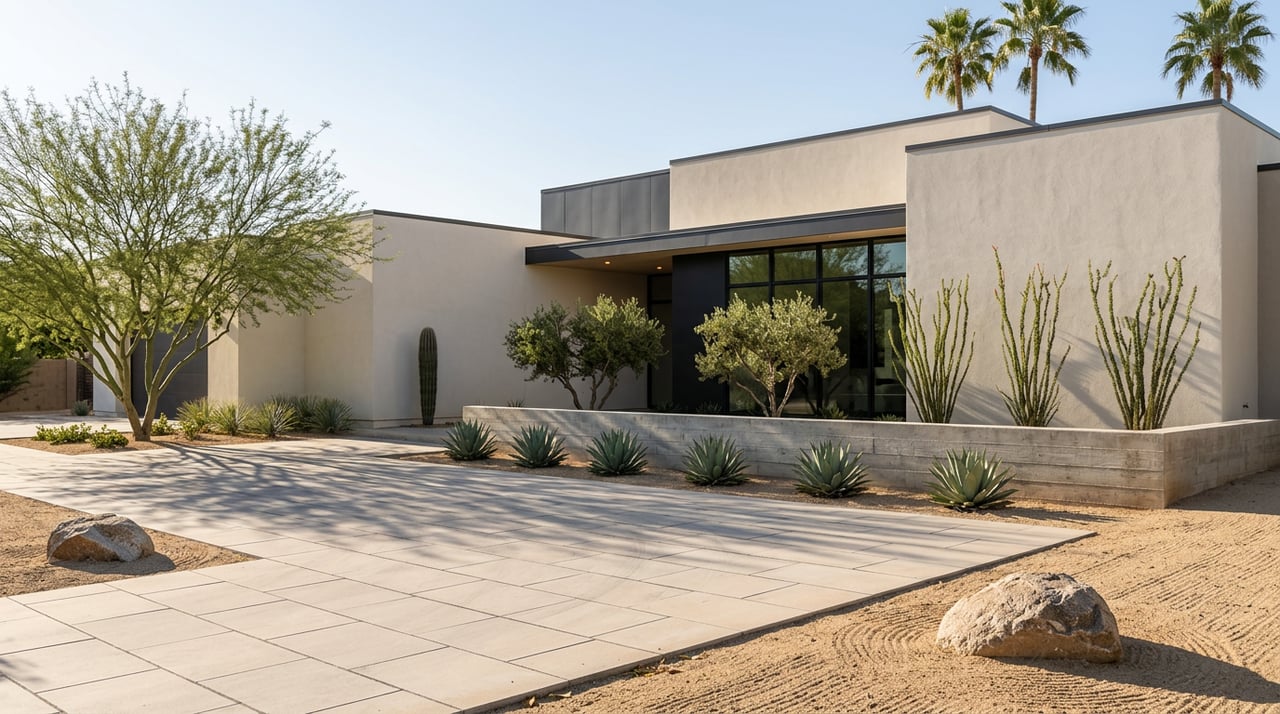
Is your Paradise Valley lot worth more than the house on it? In PV, that is a very real possibility. With large-lot zoning, prized views, and strict hillside rules, the land itself often carries most of the value. If you are weighing renovate vs rebuild vs sell, you need a clear way to separate lot value from structure value.
In this guide, you will learn what drives lot value in PV, how local zoning and Hillside rules affect feasibility, and simple methods appraisers use to split land from improvements. You will also see local price examples and a practical checklist to help you take the next step. Let’s dive in.
Lot value vs house value in Paradise Valley
Paradise Valley is known for low-density, large-lot living. That identity shows up in common zone labels you see on listings and permits, such as R-43 for roughly one-acre lots and R-175 for larger estates. With bigger parcels and premium views, the market often prices the land higher than the existing structure.
The town’s permit materials and forms reflect this reality. You will see items like height certifications for R-43 and R-175, demolition and grading requirements, dust control, native-plant notes, and even view fence and vegetation agreements. When you are planning a renovation or a teardown, the rules on the ground shape what is possible and what a buyer will pay for the dirt. You can review these requirements on the Town’s permits page to understand the typical submittals for PV projects (Town of Paradise Valley permits and handouts).
What drives lot value in PV
Location and amenity corridors
In PV, proximity to Camelback and Mummy Mountain, resort and golf nodes, and signature streets can push land value higher. The area ranks among the most expensive in Arizona, and that premium often accrues to the lot itself rather than the current home (Paradise Valley market context).
Views and orientation
Mountain backdrops, city-light vistas, and clean sightlines matter. Parcels oriented toward Camelback, Mummy, or the Praying Monk typically command higher prices. The Town also identifies visually significant corridors, which helps explain why some streets see stronger land demand than others (Visually Significant Corridors overview).
Lot size, shape, and usable area
Acreage sets a baseline, but the shape and usable, buildable area drive design potential. Regular shapes and larger flat pads improve layout options for a main residence, pool, and guest spaces. Assemblages or larger contiguous parcels often trade at a premium per acre because they unlock more design flexibility.
Topography and Hillside designation
Steeper slopes can reduce buildable footprints and add costs for grading, retaining, and drainage. In PV, a Hillside designation triggers extra review and submittals, which can extend timelines and budgets. Always check Hillside status early in your analysis (Hillside Building Committee).
Utilities and access
Parcels with municipal sewer and water are simpler and often more valuable. Lots that require off-site utility work or rely on wells or septic can see reduced net land value after you price the added work. The Town’s permit and plan materials often note sewer or septic status, so pull those before you budget (PV permits and handouts).
Redevelopment potential
Some parcels can be split or assembled, which changes highest-and-best-use and therefore land value. Confirm what is possible with the Town’s Planning Commission if you are considering a split or a larger concept plan (Planning Commission overview).
How zoning and Hillside rules change value
Large-lot districts shape the build envelope
Zoning labels like R-43 and R-175 set lot size norms, setbacks, lot coverage, and height limits. That translates into how large and tall you can build, and where structures can sit. PV also uses height certification forms and other checks to confirm compliance, which you will find in the permit handouts (PV permits and handouts). Because the Town is modernizing its code, confirm current rules before you commit to a design path.
Hillside review adds steps and cost
Hillside parcels require additional reviews for grading, stormwater, construction staging, and limits on disturbance. You may also encounter bonds or temporary easement needs. These milestones affect schedule and feasibility, so factor them into your economics from the start. Use the Town’s Hillside resource and the public GIS map to check your parcel’s status (Hillside overview, PV GIS maps portal).
Demolition and grading: typical PV triggers
If you are leaning toward a teardown, expect to secure demolition permits and provide grading and drainage plans. Dust control and native-plant preservation can also apply, along with view fence or vegetation agreements where relevant. Build these requirements into your budget and timeline so your land value math stays accurate (PV permits and handouts).
Simple ways to separate land vs structure value
Appraisers and agents often split the sale price into land and improvements using three straightforward methods. These are standard practices in assessor and appraisal guidance (real property valuation manual).
1) Vacant-land sales comparison
Look for recent vacant-lot sales in the same micro area and with similar view corridors. When you have good land comps, this is the cleanest way to estimate land value.
2) Extraction or allocation method
Start with an improved sale price and subtract the market value of the building after depreciation. The remainder is the implied land value. Use conservative assumptions, because small errors in the building estimate can swing the land value a lot.
A quick example:
- Sale price: 5,000,000
- Estimated replacement cost new of the home: 2,400,000
- Depreciation estimate: 20 percent, so depreciated improvement value is 1,920,000
- Implied land value: 5,000,000 minus 1,920,000 equals 3,080,000
3) Land residual or subdivision method
If the highest-and-best-use is a different configuration, model the end value, subtract all development and soft costs plus a developer profit, and the leftover amount is the raw land value. This is most useful when direct land comps are scarce.
For added context on how the County views land and improvements in your tax record, check your parcel page and the County’s overview of Full Cash Value and Limited Property Value (Maricopa County Assessor).
Local price examples: how the spread works
Recent public records in PV show a wide range of per-acre and per-square-foot prices because views, lot size, and location vary so much. Here are two examples that show the spread.
| Property example | Lot size | Sale price | Approx. price per acre | Approx. price per sqft |
|---|---|---|---|---|
| 5909 N Invergordon Rd, closed Feb 2025 | 2.07 acres | $3,420,000 | ~$1,652,000 | ~$38 |
| 5711 N Yucca Rd, Unit 10, closed Nov 2024 | 4.96 acres | $12,500,000 | ~$2,520,000 | ~$58 |
The takeaway is simple. Do not use a single price-per-acre number across PV. Two lots even a short drive apart can trade at very different rates because of view quality, street character, and buildable area. When you are valuing your property, lean on the closest vacant-lot comps you can find and confirm details with the Assessor or the MLS.
Paradise Valley teardown vs renovate: quick checklist
Use this list to frame an early go or no-go decision.
- Pull your parcel record. Review how the County lists land and improvement values to understand the baseline split in your tax record. It is not market value, but it is a fast starting point (Maricopa County Assessor tools).
- Ask for vacant-lot comps. Focus on your immediate micro area and view corridor. Recent land sales are the most direct guide to lot value.
- Get two cost paths from a builder. Price a renovation to market standard and a new build at your desired size. Compare each total cost to expected resale.
- Confirm zoning limits early. Check lot coverage, height, setbacks, and whether the parcel has a Hillside designation. A pre-application touchpoint with Town staff can reduce entitlement risk (Planning Commission overview).
- Verify utilities and access. Confirm sewer or septic, water source, electrical capacity, and any easements. Larger changes will likely require civil and grading plans (PV permits and handouts).
- Budget demolition and abatement. Older homes can have asbestos or lead that require licensed removal. Expect demolition permits and dust control plans (PV permits and handouts).
- If selling as a teardown, prepare a land-first packet. Include a land-focused CMA, an architect’s concept showing a likely new-build envelope, and clear notes on zoning and any Hillside constraints. This helps serious buyers price your lot with confidence.
Next steps
If you are on the fence between renovating and rebuilding, start with the data that matters most in PV. Confirm Hillside status, utility setup, and zoning limits, then use direct land comps and a simple extraction to test whether the lot or the house is driving your value. A brief pre-application conversation with the Town can save weeks later, and a builder’s rough numbers will sharpen your math.
When you want a discreet, high-touch plan, work with a local advisor who treats your time and privacy with care. From curated pre-market exposure to coordinated site walks and, when helpful, aerial orientation flights, you can move fast and make a confident decision. For a private, consultative plan tailored to your property, connect with Clayton Wolfe.
FAQs
How do I tell if my PV home is a teardown candidate?
- Compare the total cost and time to renovate to market standard against the combined cost to demolish, build new, and carry the project. If new comparable homes on similar lots sell for well above that total, the teardown path often pencils. You can learn more about valuation methods in the assessor guidance (valuation manual).
What is a Hillside designation in Paradise Valley?
- A Hillside designation means your lot triggers extra review for grading, drainage, staging, and disturbance limits, which can add time and cost. Check status and requirements with the Town’s resources (Hillside overview, PV GIS maps portal).
Will building new increase my Maricopa County property taxes?
- A new build typically raises the assessed improvement value. The County compares Full Cash Value and Limited Property Value and explains how assessments and appeals work on its site (Maricopa County Assessor).
How do views and corridors affect PV lot value?
- Mountain and city-light views, clean sightlines, and certain corridor locations can lift land pricing. The Town recognizes visually significant corridors, which helps explain demand patterns by street (corridor overview).
Where can I confirm PV permit needs for a teardown?
- Start with the Town’s permits and handouts for demolition, grading and drainage, dust control, native-plant notes, and height certifications. These documents outline typical submittals and forms (PV permits and handouts).