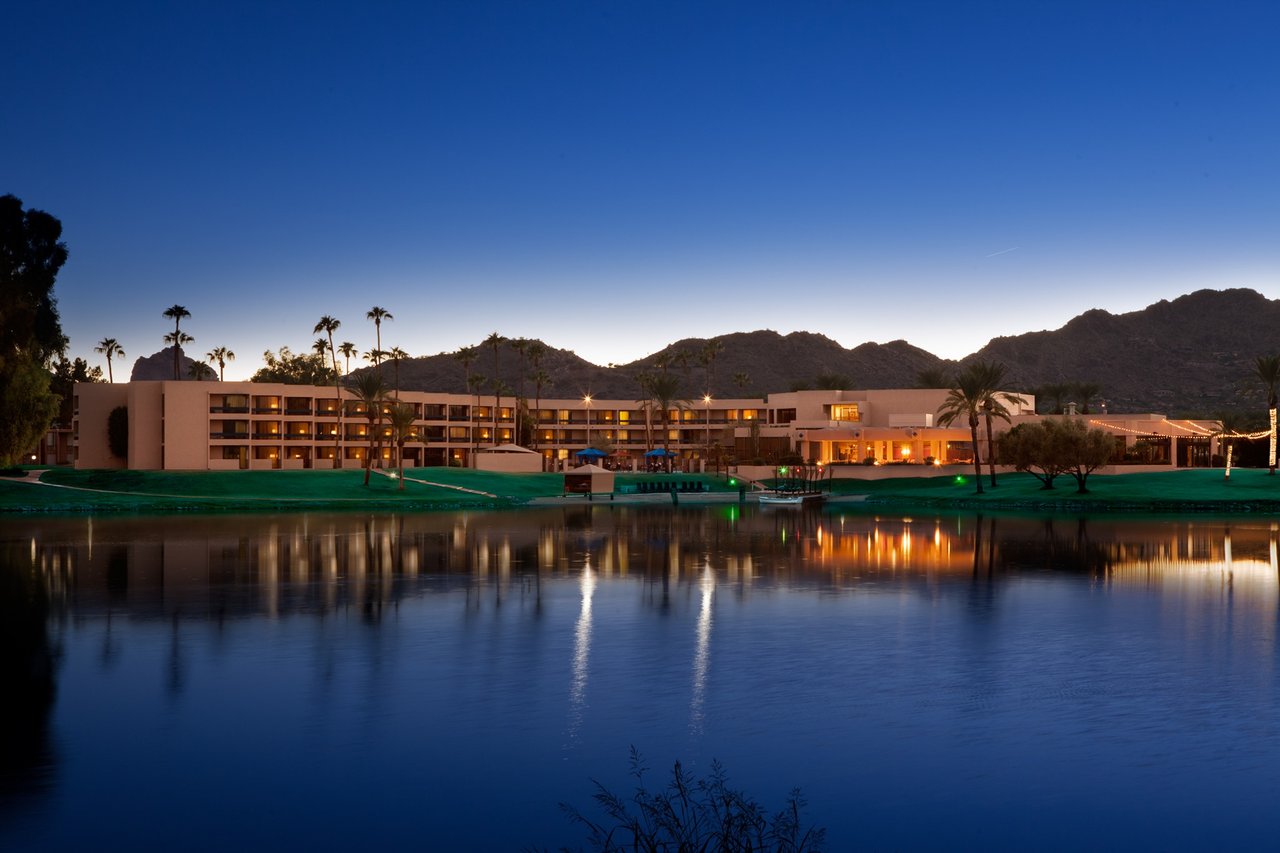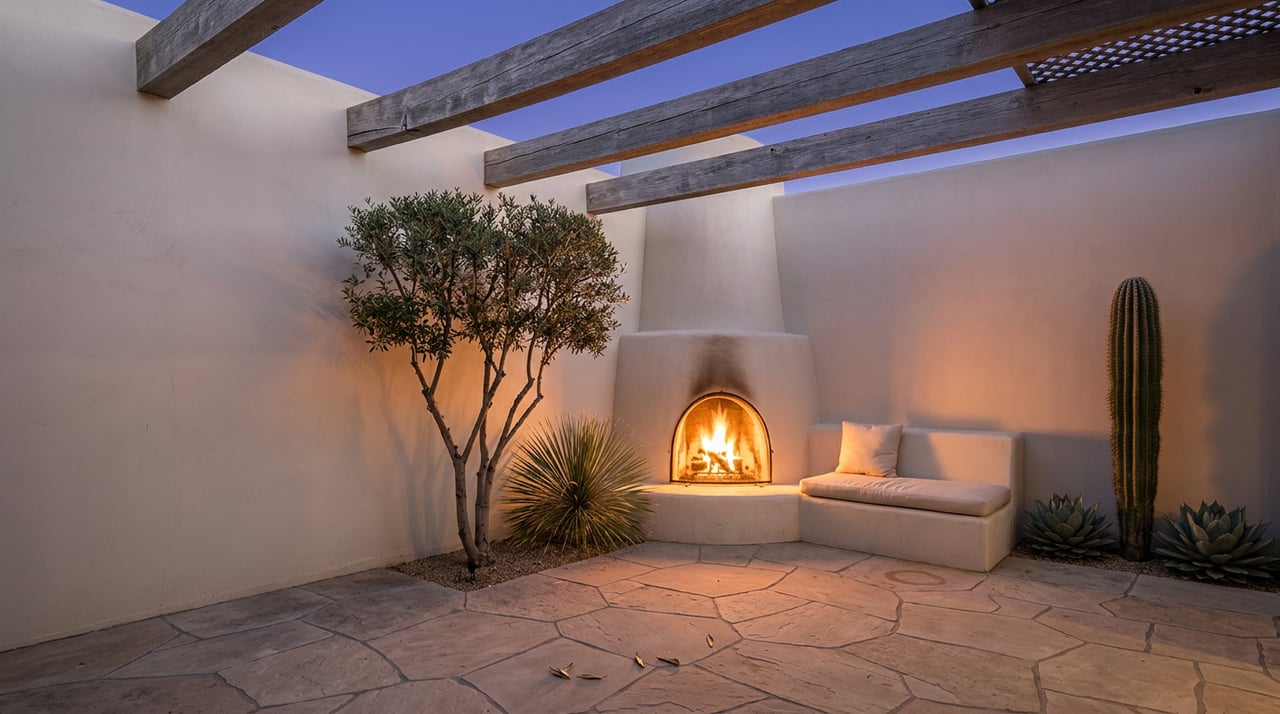
Walk into The Hermosa Inn on any weeknight in August and you'll find two very different crowds. Out on the patio, a few resort guests are ordering the signature cocktail under string lights, checking Camelback Mountain off their trip itinerary. Down a narrow staircase, past a heavy wooden door, a handful of Paradise Valley regulars are seated in a candlelit room that stays a constant 57 degrees no matter what the thermometer says outside. Most people who've lived here for years know only one of those rooms exists.
That's the detail worth knowing: the bar landed on a national list of America's most historic watering holes within the past year, and the recognition has almost nothing to do with why locals actually go there.
The List Almost No One In Paradise Valley Noticed
The National Trust for Historic Preservation commemorates historic hotels through its Historic Hotels of America program, and for the first time, the website released a list of the top 25 most historic bars, taverns and speakeasies. Of the 25 chosen from more than 300 member properties nationwide, only two are in Arizona. One is in Prescott. The other is The Glass Bar at the Hassayampa Inn, a hotel built in 1927, recognized for its dirty martinis and history of hosting live musicians. The second is LON's Last Drop, tucked inside The Hermosa Inn a few blocks off Camelback Road.
Chowhound picked the story back up in early 2026, drawing its own feature list from the same Historic Hotels of America roster. Editors evaluated guest reviews, social media insights, and media coverage to identify bars that continue to embody the essence of their era, and LON's Last Drop made the cut a second time. Managing director Jon Dils put it simply when the honor was announced:
"We're honored to see that heritage recognized among some of the most historic bars in the country."
For a property that's been quietly serving Paradise Valley since before most current residents were born, the national attention is almost beside the point. The bar didn't change. Somebody outside the neighborhood just finally noticed.
A Cowboy With No Blueprint Built This Room by Hand
The building predates the recognition by about ninety years, and the way it got built explains a lot about why it still feels different from anywhere else in the neighborhood. Cowboy artist Alonzo "Lon" Megargee purchased six acres of land in what is now Paradise Valley in 1935 and built his studio out of adobe bricks, calling his home Los Arcos and later Casa Hermosa. Megargee had no formal plans for the building. Influenced by architecture he had studied in Spain and Mexico, he used old wooden beams from an abandoned mine and poured a mixture of oil and ash from the roof to age the exterior walls.
The place grew the way a lot of Arizona hospitality did back then, informally and by necessity. Due to the extended length of stays of many of his guests, Megargee began running a guest ranch to supplement his artist's income, and local law enforcement suspected he used the ranch for illegal gambling, so he constructed a tunnel from the main building to the stables to provide an easy escape into the desert. Megargee continued to add rooms until he sold the property in 1941, and the next owners added a pool, tennis court, and more casitas, transforming it into an actual guest resort.
The building nearly didn't survive long enough to earn this kind of recognition. A fire damaged La Casa Hermosa in 1987, and it sat vacant until the early 1990s. In 1992, Fred and Jennifer Unger purchased the inn, restored it while keeping its original Southwest character, and reopened it in 1994 under the name The Hermosa Inn. The property was formally inducted into Historic Hotels of America in 2011, fourteen years before it made the bars list that's bringing it renewed attention.
What survived the fire and the restoration is the part that matters if you're sitting at the bar today. The restaurant and bar are located in the area that once served as Megargee's studio, and these spaces retain much of the studio's original character, offering a rare glimpse into Arizona's artistic and architectural heritage. The bar still features exposed sections of Megargee's original adobe walls, letting you see the hay, straw, and clay composition typical of the era, and the original adobe fireplace remains a focal point.
Two Bars, Depending on the Month
Here's the part that doesn't show up on any national list. LON's Last Drop essentially functions as two different rooms, and which one you want depends entirely on the calendar.
The picturesque patio is known for its colorful flowerbeds, desert flora, twinkling lights, trickling fountain, and five fireplaces. That's the version most people picture, and it's the right call from roughly October through April, when Paradise Valley evenings cool off enough to sit outside without checking the forecast first.
August is a different math problem entirely. Earlier this week, the National Weather Service forecast extreme heat for Maricopa and Pinal counties, with temperatures peaking at 117 degrees daily through the weekend of August 9. Five fireplaces do nothing for you on a night like that. What does is the wine cellar tucked beneath the restaurant, a candlelit subterranean space with a vaulted ceiling made from Chicago brick and reclaimed beams, kept at a cool 57 degrees year-round, making it a genuine escape from Arizona's scorching summer heat. It holds up to a dozen people, which is exactly the kind of detail a longtime resident knows and a first-time visitor doesn't.
That seasonal split is the real local knowledge here. The patio is what gets photographed. The cellar is what gets used by people who actually live within a few miles of Camelback Mountain and have learned, the hard way, what a Paradise Valley August feels like at 8 p.m.
What's Actually in the Glass
The bar's name comes from a specific piece of art, not a marketing team's idea of Western nostalgia. LON's Last Drop takes its name from Megargee's iconic painting, "The Last Drop From His Stetson," commissioned in 1923, depicting a cowboy offering his horse a final drink from his upturned hat. It's still featured inside Stetson's premium hats today, more than a century after Megargee painted it.
The house cocktail borrows the same name and leans into the same story. The signature drink, fittingly called the Last Drop, is crafted with High West Double Rye whiskey, Luxardo Apricot Liqueur, sweet vermouth, and blood orange. As Historic Hotels of America described it when the list came out: "It honors Megargee's wild spirit, while offering a refined taste of the region that he called home."
The food side runs through executive chef Brian Peterson, who crafts a creative menu offering hearty yet refined selections for breakfast, lunch, dinner, and brunch, from mixed berry toast and huevos rancheros to dinners with foie gras, braised oxtail, and Norwegian salmon. Down at Last Drop specifically, the menu stays more casual, built around small plates and pizza from a wood-burning oven, which is a better fit for a bar than a tasting menu ever would be.
A few practical notes worth keeping in your back pocket:
- The Last Drop cocktail (High West Double Rye, Luxardo Apricot, sweet vermouth, blood orange) is the one to order if you want the direct connection to Megargee's painting
- The wine cellar seats up to twelve and stays at 57 degrees regardless of the season
- The patio's five fireplaces make it the better choice once nighttime lows drop back into the 60s and 70s, typically starting in October
Why This Still Matters After Ninety Years
Paradise Valley doesn't have a downtown strip or a walkable commercial corridor in the way some of its Scottsdale neighbors do. What it has instead are a handful of long-running institutions that residents tend to treat as background scenery until something forces a second look. A national bars list is exactly that kind of prompt.
The Hermosa Inn sits in one of the oldest adobe haciendas in Arizona, with a patio that looks straight at Camelback Mountain, and it's been doing that for more than ninety years. The fact that a cowboy artist with no architectural training built the room by hand, that it survived a fire and a decade of vacancy, and that it's still pouring drinks under the same beams he salvaged from an abandoned mine is the kind of detail that makes a neighborhood feel less like a collection of gated communities and more like a place with an actual past.
If you've lived in Paradise Valley for a while and haven't been down to the wine cellar, this is the month to fix that. If you're newer to the area, it's a good first stop for understanding what makes this particular stretch of desert different from anywhere else you could have landed.
Clayton Wolfe works and lives in these Paradise Valley neighborhoods every day, from the historic pockets around Camelback Mountain to the newer estate developments further north. If you're thinking about a move into or within this part of the Valley and want a guide who knows which details actually matter, Clayton Wolfe is a good place to start that conversation.