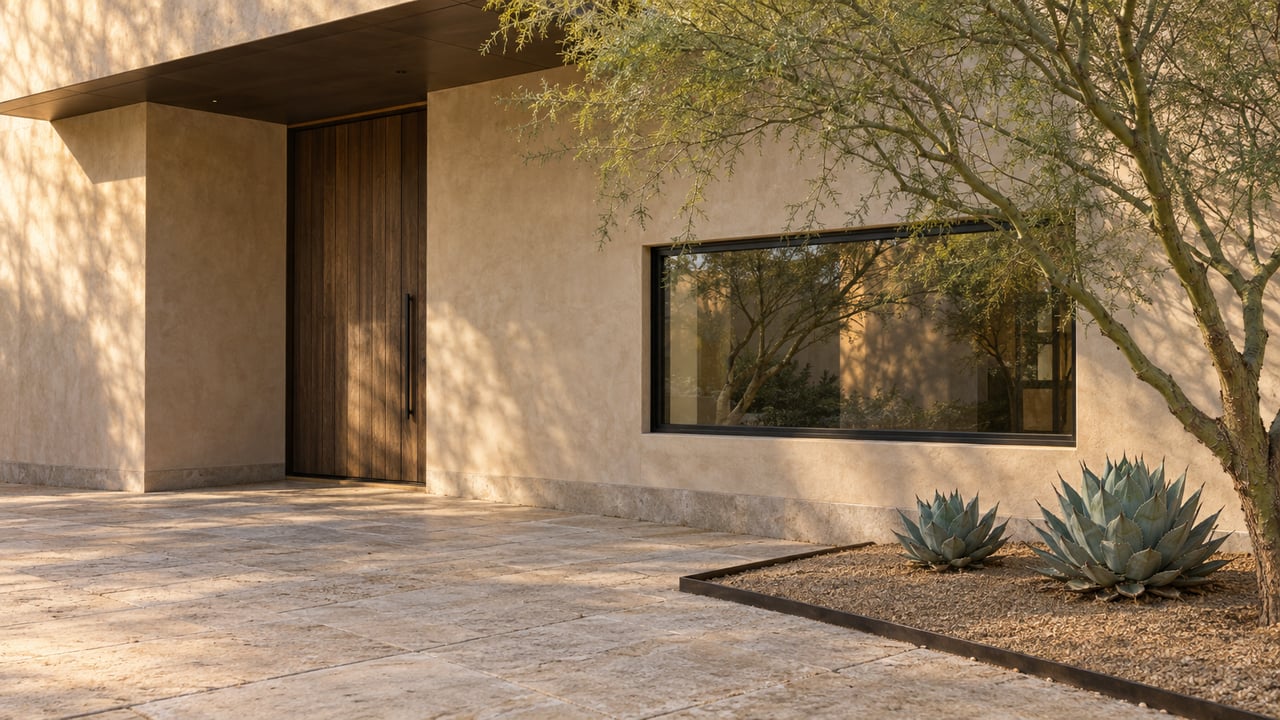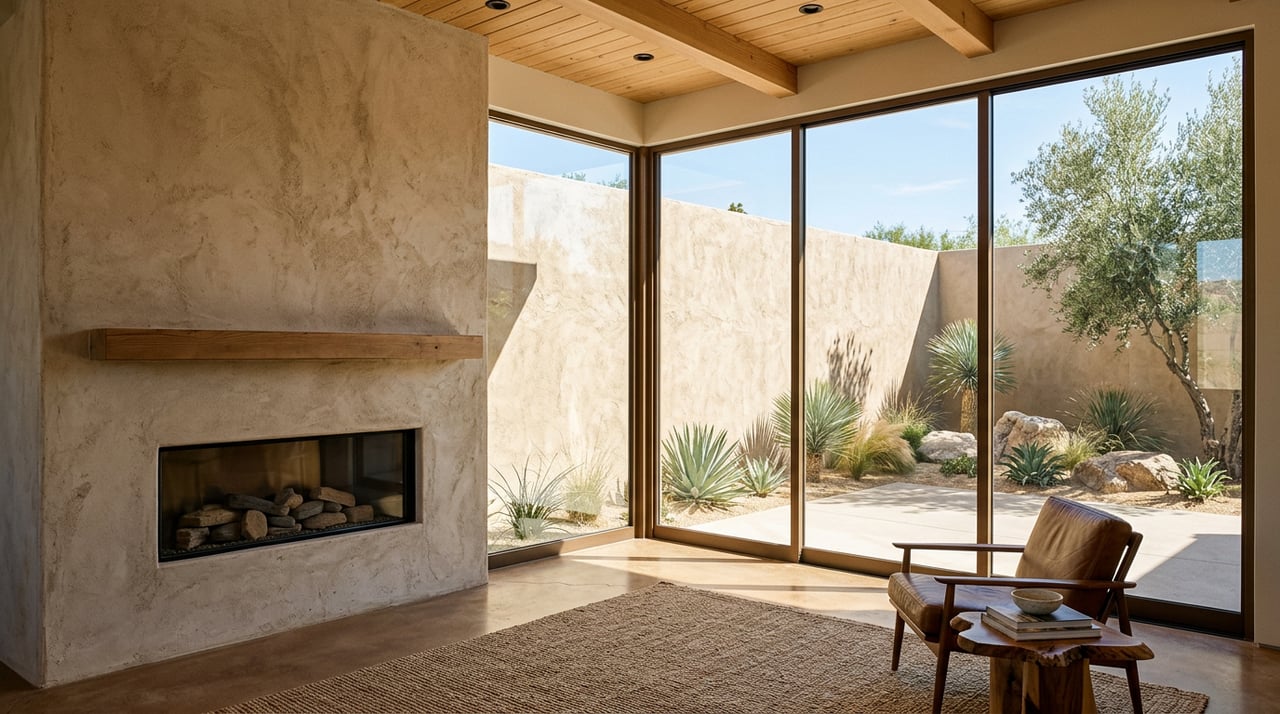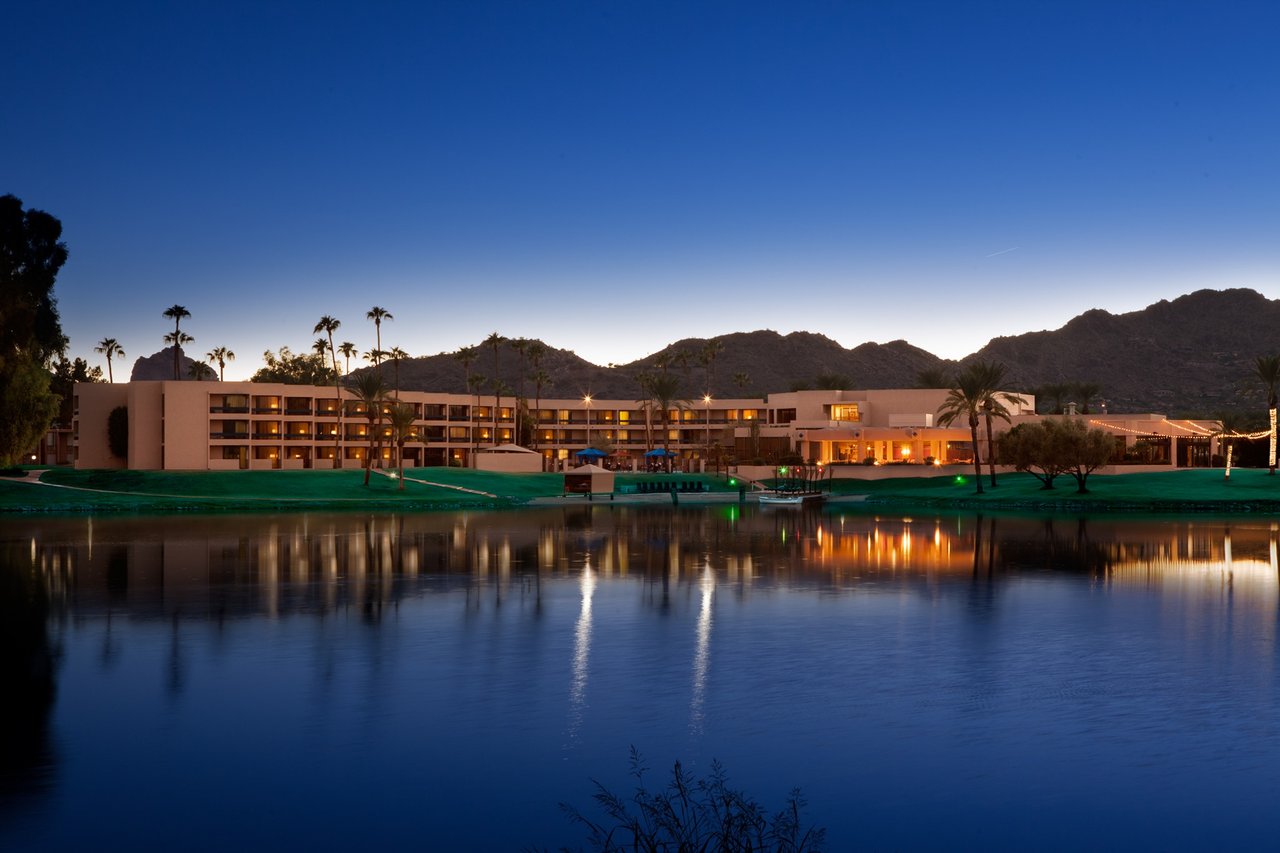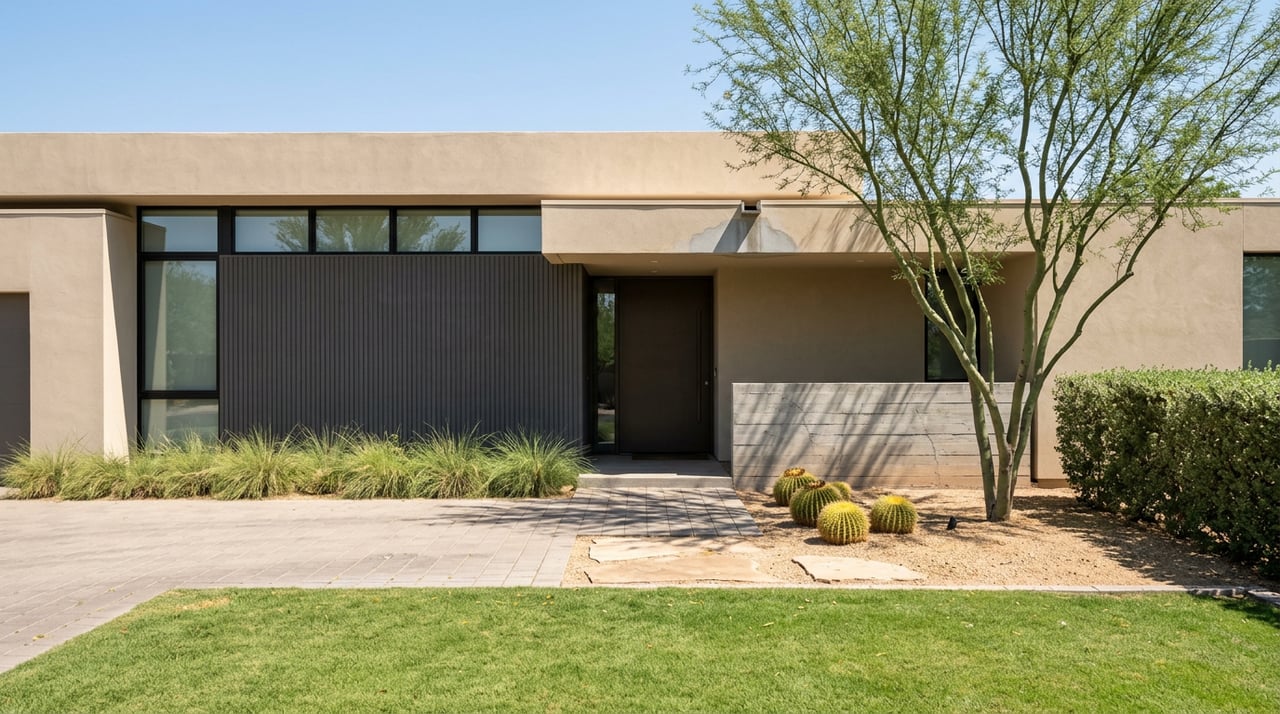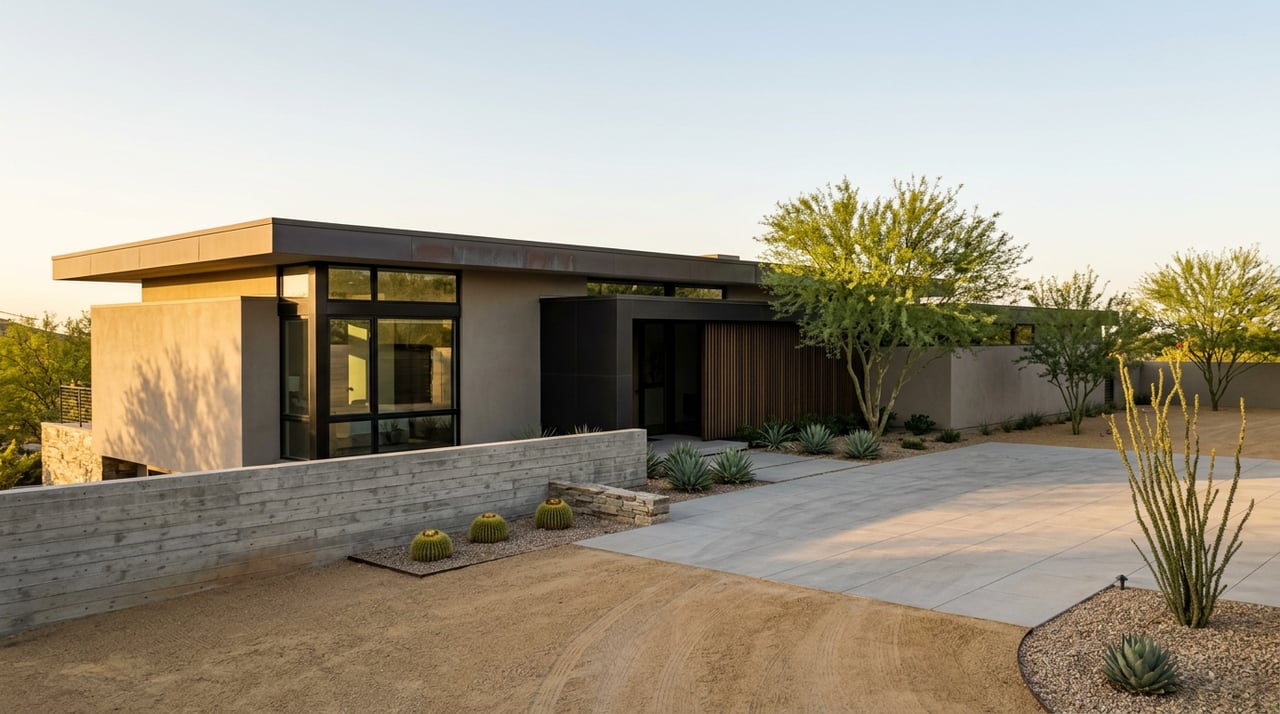
"This article exists to establish provisions to: a) regulate the intensity of development; b) preserve and protect the hillside environment; c) provide for the safety and welfare of the Town and its residents."
That's the stated purpose of Article XXII, the Hillside Development Regulations written into the Town of Paradise Valley's Zoning Ordinance. Most buyers never read it. They read the listing sheet, see "1.2 acres," compare it to the acre-plus lot two streets over, and assume the two parcels can support roughly the same house. In Paradise Valley, that assumption is often wrong, and the reason has nothing to do with price per square foot or lot orientation. It has to do with a number that never appears on the listing sheet at all: the slope of the building site, measured as a percentage.
Two one-acre lots priced identically, zoned identically, and sitting a quarter mile apart can produce two very different homes once the Town's hillside math runs its course. If you're comparing raw or teardown land here, acreage is the number the market trains you to trust. Slope is the number that actually decides how much house you get to build.
The Rule That Changes the Math Above 10% Slope
Any Paradise Valley building site with a slope of 10% or greater falls under Article XXII, and the Town does not apply that threshold loosely. Once a lot crosses it, a sliding scale caps how much of the natural ground you're allowed to disturb through grading, cutting, filling, clearing vegetation, or trenching. The steeper the site, the smaller your share.
| Building-site slope | Maximum disturbed area |
|---|---|
| 10% | up to 60% of the site |
| 15% | roughly 34% |
| 25% | roughly 13% |
| Past 50% | falls into single digits |
Look at what that means for two lots that read identically on paper. A one-acre parcel at a 10% slope still lets you touch more than half the ground. The same one-acre parcel at a 15% slope drops you to roughly a third. Push into the steep terrain that produces the best Camelback or Mummy Mountain views, and you may legally be able to grade only a sliver of what you own. The lot with the more dramatic view, the one that photographs best and commands the premium, is frequently the lot with the least buildable ground beneath the photograph.
This is why comparing two Paradise Valley lots on a per-acre basis without a slope analysis is close to meaningless. A civil engineer's slope study, done before you write an offer, tells you more about your eventual house size than the acreage figure in the listing ever will.
A Second Ceiling: Height Tied to Acres, Not Feet
Slope caps how much ground you can touch. A separate rule caps how tall you can build on it, and that cap moves with lot size rather than sitting at a flat number the way it does in neighboring cities. Under the Town's Article X height and area table, a primary residence on a lot under 3 acres is held to 24 feet, not counting chimneys. Between 3 and 4 acres, the ceiling rises to 26 feet. Only parcels at 4 acres or more reach 30 feet, chimneys included. Accessory structures top out at 16 feet regardless of lot size.
That 24-foot standard sits well under the 30 feet Scottsdale and Phoenix allow outright on comparable single-family lots. On a hillside parcel, the math gets tighter still. Height is measured from natural or unrestored grade at each point along the building, not from a single reference elevation, so a lot that drops noticeably from front to back can produce a downhill wall that hits its ceiling well before the design does. An architect who has run this calculation on Paradise Valley hillside before knows to design around it from the first sketch. One who hasn't tends to discover the conflict during plan review, after the buyer has already committed to a floor plan.
The 25% Rule That Catches Buyers Who Think Bigger Lot Means Bigger House
Layered on top of both slope and height is a floor-area ratio cap that applies town-wide across the R-175, R-43, R-35, and R-18 districts alike: your total floor area cannot exceed 25% of the lot. On a standard one-acre R-43 parcel, roughly 43,560 square feet, that pencils out to a home in the low five figures of square footage before garages, covered patios, and other counted spaces start eating into the number.
The FAR cap doesn't care whether your acre is flat or steep. It applies either way. Which means the buyer who assumes more land automatically buys more house is only half right. More flat land buys more house. More sloped land buys more disturbance restrictions layered on top of the same 25% ceiling, which is a materially different proposition even when the deed says the same acreage.
There's a related trap in how Paradise Valley defines a legally usable lot shape. The subdivision code requires that a lot's boundary lines and front setback be able to enclose a circle at least as wide as the district's minimum lot width. An oddly shaped parcel can meet the area requirement on paper and still fail this configuration test, shrinking the usable building area in ways that don't show up until a site plan is drawn. This is one more reason a survey belongs in due diligence before a Paradise Valley offer, not after.
The Committee That Has to Sign Off Before Anyone Breaks Ground
Hillside-designated lots don't just face stricter math. They face an extra layer of human review. The Town's Hillside Building Committee, six members split between citizen appointees and rotating Planning Commissioners, reviews every new hillside home for land disturbance, grading, drainage, exterior lighting, building materials, and height before a permit is issued. Under Article XXII, no clearing, grubbing, grading, bulldozing, or blasting can begin in the Hillside Development Area until the Town has approved plans and issued the appropriate permits. If a project doesn't break ground within 12 months of that approval, the plans have to be resubmitted, with only a one-time six-month extension available.
This is the layer that separates a flatland teardown from a hillside custom build in terms of timeline. It's also the layer that matters most in the areas where Paradise Valley's steepest, most view-driven lots concentrate: estate sites near Mummy Mountain and the Camelback foothills, the guard-gated hillside enclave at Paradise Reserve, and newer developments like Cameldale Estates, an 11-home community at the base of Camelback Mountain designed by CP Drewett of Drewett Works. Buyers looking at newer luxury releases such as Silver Sky are buying into the same review process the moment their lot crosses the 10% slope line.
There's a second, quieter ordinance detail that trips up buyers planning a teardown: any demolition removing more than 12 linear feet of wall, fence, or roof structure requires its own demolition permit, obtained before the building permit is issued. A "we'll knock it down and start fresh" plan needs to account for that sequencing from day one.
The Utility Question Nobody Asks Until Escrow
Slope and height dominate the buildability conversation, but Paradise Valley has a second friction point that surfaces later in a transaction and catches buyers by surprise almost as often: many parcels, particularly on hillside and larger-acreage sites, are still served by septic rather than town sewer. Coverage is genuinely mixed across the town, with portions served by City of Phoenix Water Services or a system operated by the City of Scottsdale, and no assumption should be made either way without checking utility records for the specific address.
If the home is on septic, Arizona law requires a transfer-of-ownership inspection within six months before closing, performed by a qualified inspector under the state administrative code governing onsite wastewater systems. The inspection typically includes pumping the tank, and the seller must hand the buyer a completed Report of Inspection before the property transfers. After closing, the buyer has 15 calendar days to file a Notice of Transfer. Maricopa County lists that filing fee at $50, while the state agency's own FAQ documentation puts it at $70, a small discrepancy worth confirming directly with whichever office you're filing through rather than assuming either number.
Inspection costs generally run into the low hundreds of dollars, with pumping adding a few hundred more depending on tank size and access. The bigger risk isn't the fee. It's timing. If the inspection turns up a failed component, tank or drainfield replacement can require county permits that take up to 30 days, and that delay has been known to unwind deals outright, especially on systems over 20 years old. Sellers are generally expected to schedule and cover the initial inspection, but if a lender is involved, the loan won't close without a functioning system regardless of who pays for repairs.
What This Means Before You Write an Offer
None of this makes Paradise Valley land a bad bet. It makes acreage the wrong headline number to buy against. Before an offer goes in on a hillside or estate lot, the sequence that actually protects a buyer looks like this:
- Order a topographic survey with a slope analysis before assuming buildable area from lot size alone
- Confirm the zoning district and check whether the parcel triggers the acreage-based height tier you expect
- Run the 25% floor-area math against the actual usable, non-disturbed portion of the lot, not the gross acreage
- Ask whether the parcel has ever gone through Hillside Building Committee review, and if not, budget time for it
- Verify septic or sewer status directly with the Town's utility contacts rather than assuming from neighboring homes
Construction costs across Paradise Valley reflect exactly this complexity. Custom builds here commonly run $500 to $1,000 or more per square foot in 2026, the highest range anywhere in metro Phoenix, and slope is one of the biggest reasons why. The land under the view is rarely the same product as the land under the acreage figure.
Frequently Asked Questions
Does every Paradise Valley lot go through Hillside Building Committee review? No. Only parcels the Town classifies as hillside, generally those with a building-site slope at or above the 10% threshold set in Article XXII, require this review. Flatter lots follow the standard staff-level building permit process.
Can I add a second story if my lot is capped at 24 feet? Sometimes, but a second story on an R-43 lot doubles the required side yard from 20 feet to 40 feet, and on hillside sites the height plane is measured from natural grade at each point, which can restrict a second story more on the downhill side of a sloped lot than the uphill side.
Is a home's septic status something the seller has to disclose? Yes. Arizona sellers must disclose known material facts about a property's wastewater system, and homes served by septic require a transfer-of-ownership inspection completed within six months of closing regardless of what either party prefers.
If you're evaluating a hillside or estate lot in Paradise Valley and want the slope, height, and floor-area math run before you commit to an offer, that's exactly the kind of groundwork Clayton Wolfe does for buyers before contracts get signed, not after. Request a Private Consultation to talk through a specific parcel.