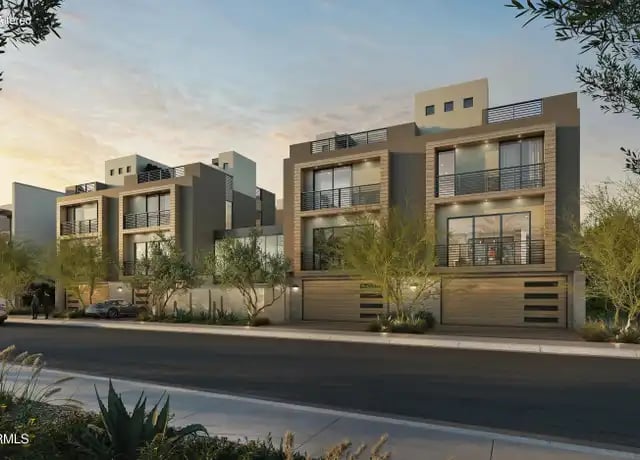
If you own — or you're eyeing — a single-family lot within a mile of Old Town Scottsdale, a new city ordinance changed what you're legally allowed to build there. As of late 2025, Scottsdale permits duplexes, triplexes, and fourplexes on single-family lots in that zone, a shift driven by a state law the city had no choice but to adopt. It's the kind of change that quietly resets land values before most owners even hear about it.
What Changed: Ordinance 4690
The Scottsdale City Council adopted Ordinance 4690 on November 17, 2025, amending the zoning code to comply with HB2721 — a state law passed in April 2024 that forced every Arizona city to allow "middle housing" (duplexes, triplexes, and fourplexes) in areas previously zoned exclusively for single-family homes. Cities had until January 1, 2026 to write their own rules; if they didn't, the state's default rules would apply automatically, with far fewer restrictions. Scottsdale moved to adopt its own version ahead of that deadline, giving it more control over where and how middle housing gets built.
Where Middle Housing Is Actually Allowed
This isn't a citywide free-for-all. The ordinance applies in two specific situations.
Within one mile of Old Town
A middle housing development is permitted on a qualifying single-family lot located within a one-mile radius of the Old Town area, subject to the exclusions below. Only one duplex, triplex, or fourplex is allowed per lot — you can't stack multiple structures on the same parcel.
New developments over 10 acres
For any new residential development larger than 10 contiguous net acres, at least 20% of the units must be middle housing, capped at the zoning district's maximum density.
Where it's off the table
State law excludes unincorporated areas, land not zoned residential, and parcels lacking adequate water, sewer, or other city services. It's also barred within the 65-decibel noise contour around Scottsdale Airport. And critically: HOA covenants (CC&Rs) that restrict middle housing are still enforceable. State law doesn't override them, so a qualifying lot inside an HOA may still be blocked at the community level.
What You're Actually Allowed to Build
Where a lot qualifies, the state law sets the ground rules and the city fills in the rest. The key numbers:
Height: capped at two stories.
Floor area ratio: 0.5 maximum, cumulative across all buildings on the lot (not counting accessory structures).
Parking: one off-street space per unit, minimum — and it can't sit in the front yard.
Owner occupancy: not required. You don't have to live in one of the units — this can be a straight rental play.
Fire sprinklers: not required for middle housing under this ordinance.
Utilities: each unit needs its own separate utility connections, reviewed and approved by the relevant utility provider.
Everything else — setbacks, building height limits beyond the two-story cap, fencing, and landscaping — follows the standard rules of whatever zoning district the lot sits in.
What This Means If You Own Near Old Town
If your lot qualifies, you now have an option you didn't have a year ago: sell as-is, or explore adding a second, third, or fourth unit before you sell. That optionality tends to show up in land value even for owners who never build anything — a qualifying lot is worth more to an investor than an identical lot that can only ever hold one house. If you're weighing a sale in the next year or two, it's worth knowing whether your specific address falls inside the one-mile radius and whether your HOA's CC&Rs (if you have one) already restrict this, before you price the property.
What This Means If You're Buying
For investors and buyers thinking about long-term upside, qualifying lots near Old Town are worth a second look — the ability to add a rental unit or two on the same parcel changes the math on a purchase. The catch is that qualification isn't obvious from a listing photo. It depends on exact distance from the Old Town boundary, the lot's zoning district, service availability, and any HOA restrictions layered on top. That's diligence worth doing before you write an offer, not after.
How the Approval Process Works
Scottsdale runs middle housing approvals through a four-step process: a pre-application submittal with a rough site plan, a pre-application meeting with city staff to walk through requirements, formal submittal for administrative review, and finally permit review of full construction documents once the application is approved. It's an administrative process rather than a public hearing, which keeps timelines more predictable than a typical rezoning case — but it still takes real planning before a shovel goes in the ground.
The Bigger Picture: Why This Is Happening Now
This ordinance didn't happen in a vacuum. Arizona's population growth — fueled by continued relocation from California and other high-cost states, plus major employers expanding in the Valley — has kept pressure on housing supply even as single-family inventory in Scottsdale stays tight and expensive. State lawmakers passed the middle housing mandate specifically to force more housing options into cities that had zoned most of their land for single-family homes only. Old Town's walkability and existing infrastructure made it the obvious place to concentrate that new capacity in Scottsdale. Expect more of this kind of quiet zoning shift as the region keeps absorbing new residents faster than it's been building for them.
Frequently Asked Questions
Does this apply to my property if I'm not near Old Town?
Only if it's part of a new residential development over 10 contiguous acres. Outside the one-mile Old Town radius and outside large new developments, standard single-family zoning still applies.
Do I have to live in one of the units?
No. Owner occupancy isn't required, so a duplex, triplex, or fourplex built under this ordinance can be entirely rented out.
Can my HOA still block this?
Yes. Existing CC&Rs that restrict middle housing remain enforceable even though the city and state now allow it. Check your HOA's covenants before assuming a lot qualifies.
Does adding a duplex or fourplex increase my property value?
It can, both by adding rentable square footage and by making the lot more attractive to investors even before anything is built. The right answer depends on your specific lot, zoning district, and what's already built nearby — worth a conversation before you assume either way.
How long does the permitting process take?
It varies by project complexity, but the process runs through four stages — pre-application, a pre-application meeting, formal administrative review, and permit review — before construction can begin. Because it's administrative rather than a public hearing, it's generally faster than a traditional rezoning.
Wondering If Your Lot Qualifies?
Whether you're weighing a sale near Old Town, sizing up a lot's redevelopment potential, or just want to know what this means for your own address, I'm happy to walk through it with you specifically. Reach out and let's talk through your situation.
Sources: City of Scottsdale Planning & Development, “Middle Housing” (scottsdaleaz.gov); Hoodline, “Scottsdale Adjusts Zoning Laws for ‘Middle Housing’ in Response to State Mandate”; Arizona Revised Statutes § 9-462.13.